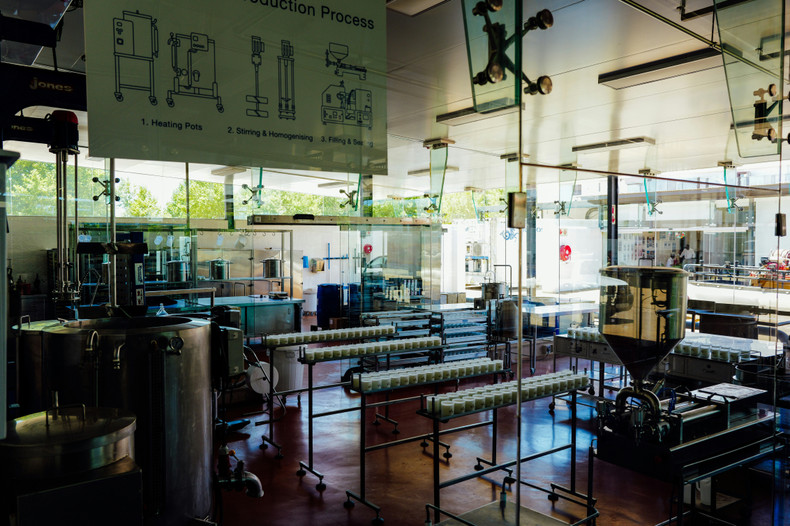
Food production facilities may not immediately come to mind when people think about hazardous gases, but these environments can contain several serious atmospheric risks. Ammonia refrigeration systems, carbon dioxide used in processing and packaging, sanitation chemicals, combustion equipment, wastewater operations, and confined spaces can all create dangerous conditions for employees.
A gas leak can also affect much more than worker safety. It can shut down production, damage stored products, interrupt refrigeration, trigger an evacuation, or create costly regulatory and insurance problems.
At Ideal Calibrations, we help food manufacturers, beverage producers, cold-storage facilities, dairies, breweries, meat processors, and other industrial operations maintain dependable gas-detection equipment. When ammonia, carbon dioxide, carbon monoxide, chlorine, hydrogen sulfide, combustible gases, or oxygen deficiency may be present, workers need detectors they can trust every time they enter an area.
Why Gas Detection Matters in Food Production, Processing, and Distribution
Modern food-production facilities rely on numerous processes that can release toxic, combustible, or oxygen-displacing gases. Some hazards are part of normal production, while others appear during leaks, equipment failures, maintenance work, cleaning, or confined-space entry.
Several factors make gas detection especially important in food and beverage operations:
- Industrial refrigeration: Many large facilities use ammonia because it is an efficient refrigerant. However, an ammonia leak can quickly create a toxic atmosphere and, at higher concentrations, a potential fire or explosion hazard.
- Carbon dioxide use: Breweries, wineries, beverage plants, commercial kitchens, freezing operations, and modified-atmosphere packaging systems frequently use CO2. A release can displace oxygen without providing a clear warning to workers.
- Confined spaces: Tanks, vats, pits, silos, mixers, freezers, drains, wastewater areas, and process vessels may contain oxygen-deficient, toxic, or combustible atmospheres.
- Combustion equipment: Boilers, ovens, furnaces, dryers, forklifts, and backup generators can produce carbon monoxide when fuel does not burn completely.
- Cleaning and sanitation: Chlorine-based chemicals, acids, caustics, and other sanitation products may release harmful gases when spilled or accidentally mixed.
- Wastewater and organic decomposition: Food waste, drains, sumps, rendering operations, and wastewater systems can produce hydrogen sulfide, methane, and carbon dioxide.
These hazards make portable and fixed gas detectors important safety controls throughout a food-production facility. However, simply buying detectors is not enough. Each instrument must be tested, calibrated, maintained, and documented to ensure it will respond when needed.
Common Gas Hazards in Food and Beverage Facilities
Every facility has a different process, but several gases appear regularly across the food-production industry.
Ammonia
Ammonia is widely used in industrial refrigeration systems found in meatpacking plants, dairies, cold-storage warehouses, frozen-food facilities, breweries, beverage plants, and large distribution centers.
A leak may develop around compressors, evaporators, valves, pipe connections, storage vessels, or machinery rooms. Because ammonia is corrosive and highly irritating, even a relatively small leak can create an immediate concern. Facilities generally use fixed ammonia detection around refrigeration equipment while maintenance personnel and emergency responders may carry portable ammonia monitors.
Ammonia sensors require careful testing with the correct calibration gas. NH3 is a reactive gas, meaning concentration stability can be affected by cylinder materials, storage conditions, tubing, regulators, and age. Always check the cylinder’s expiration date and use equipment specifically compatible with ammonia like teflon for tubing and stainless steel for regulators.
Carbon Dioxide
Carbon dioxide is used in beverage carbonation, brewing, winemaking, freezing, chilling, dry-ice applications, and modified-atmosphere packaging. It is also produced naturally during fermentation.
CO2 is colorless and can collect in low areas because it is heavier than air. A leak inside an enclosed room, cellar, cooler, tank area, or poorly ventilated production space can displace oxygen. Workers may experience headaches, dizziness, confusion, loss of consciousness, or worse before realizing that a dangerous atmosphere has developed.
Oxygen readings alone may not always provide adequate warning of rising CO2. Facilities with a known carbon dioxide hazard should use monitors designed to measure CO2 directly.
Buy Carbon Dioxide Calibration Gas
Carbon Monoxide
Carbon monoxide may come from boilers, ovens, heaters, smokehouses, internal-combustion forklifts, generators, or trucks operating near loading areas. Poor ventilation or improperly functioning combustion equipment can allow CO to accumulate.
Because carbon monoxide cannot be seen or smelled, workers must rely on properly functioning instruments. CO sensors should be bump tested regularly and checked after high exposures because an over-range event can affect sensor performance.
Buy Carbon Monoxide Calibration Gas
Hydrogen Sulfide
Hydrogen sulfide is commonly associated with wastewater treatment, but food-production facilities can also generate it through decomposing organic material. Drains, sumps, waste pits, rendering processes, treatment tanks, and sewer systems may contain H2S.
The rotten-egg odor associated with low concentrations is not a reliable warning. A person’s sense of smell can become fatigued, and higher concentrations can quickly overwhelm a worker. Portable four-gas monitors used around wastewater and confined spaces commonly include an H2S sensor.
Buy Hydrogen Sulfide Calibration Gas
Combustible Gases and Vapors
Methane may develop in wastewater systems, anaerobic digesters, waste-processing areas, and enclosed spaces containing decomposing organic material. Ethanol vapors can be present in breweries, distilleries, flavoring operations, and facilities using alcohol-based ingredients or cleaning products.
A combustible-gas sensor can help detect conditions approaching the lower explosive limit. However, facilities must understand which gas the instrument is calibrated to detect. A monitor calibrated with methane may respond differently to propane, ethanol, pentane, or other combustible vapors.
Oxygen Deficiency
Nitrogen, carbon dioxide, fermentation gases, and other releases can reduce oxygen levels in enclosed areas. Oxygen may also be consumed through corrosion, biological activity, combustion, or decomposition.
Oxygen-deficient conditions are a major concern during entry into tanks, silos, pits, vessels, freezers, wastewater areas, and other confined spaces. Some gases are heavier than air and can fall to displace oxygen. Workers should never assume an area is safe simply because it looks clean or has been opened for ventilation.
Core Calibration Practices for Food-Production Facilities
A dependable gas-detection program should include three related but distinct procedures.
Daily Bump Test
A bump test briefly exposes the detector to gas to verify that the sensors respond and the audible, visual, and vibrating alarms activate. It confirms that gas can reach the sensors and that the instrument can warn the user in an emergency.
Perform a bump test before each day’s use or according to the manufacturer’s instructions and your facility’s written procedures. This is particularly important for monitors used during confined-space entry, refrigeration maintenance, spill response, and wastewater work.
Full Calibration
A full calibration adjusts the instrument’s response to match a certified concentration of gas. Calibration may be required after a failed bump test, following an over-range exposure, after sensor replacement, or according to the manufacturer’s recommended interval (usually 30-90 days).
Only use fresh, accurate calibration gas and the correct regulator, tubing, adapter, and flow rate for your detector. An adjustment performed with degraded gas or an incorrect concentration can make the detector less accurate instead of improving it.
Food-Production Conditions That Can Affect Detectors
Food facilities can be difficult environments for portable instruments. Detectors may encounter:
- High humidity and condensation (interferes with VOC sensors)
- Refrigerated and freezing temperatures (check specs for temp ranges)
- Rapid movement between cold and warm areas (sensors do best when temps are stable)
- Grease, oil, flour, dust, and food particles (filter buildup)
- Washdown water and cleaning chemicals (sensor poisons can be present)
- Strong sanitation vapors (sensors have cross sensitivities and can be triggered)
- Physical impacts during maintenance work (workers do strange, unexplainable things to gas detectors)
- High gas concentrations during leaks (requires calibration after high exposure)
- Contamination from silicone or solvent products (kills LEL combustible sensors fast)
Moisture or debris can block a sensor membrane or pump inlet even when the sensor itself remains functional. A detector may power on normally but respond slowly—or not at all—when exposed to gas.
Inspect filters, tubing, calibration adapters, pump components, and sensor openings regularly. Never assume that a successful electronic self-test proves gas can reach the sensors. Only an actual bump test with calibration gas can verify the complete gas pathway and alarm response.
Choosing and Handling Calibration Gas Correctly
The accuracy of your calgas cylinder directly affects the accuracy of the instrument.
Food-production safety teams should follow several basic practices:
- Verify that the cylinder concentration matches the detector’s programmed calibration values.
- Check the expiration date of your gas before every calibration.
- Use fresh, NIST-traceable calibration gas from a dependable supplier.
- Store cylinders away from excessive heat, freezing conditions, and direct sunlight.
- Use a fixed-flow regulator for diffusion instruments.
- Use a compatible demand-flow regulator for pumped instruments.
- Select tubing and regulator materials appropriate for highly reactive gases such as ammonia or chlorine (usually teflon lined for tubing, stainless steel for regulators).
- Label cylinders clearly and prevent different departments from exchanging incompatible gases.
- Document the cylinder lot number and expiration date in calibration records.
Reactive gases require particular attention because they may degrade or adhere to incompatible surfaces. Long tubing runs can also slow the delivery of some gases and reduce the concentration reaching the sensor.
A Practical Gas-Detector Workflow
A straightforward routine makes it easier for employees to follow the program consistently.
Before Each Shift or Use
- Inspect the detector for damage, contamination, or blocked sensor openings.
- Confirm that the battery is adequately charged.
- Zero the detector in known clean air or use zero air when clean ambient air cannot be guaranteed.
- Perform a bump test using the correct gas.
- Verify that every installed sensor responds to gas.
- Confirm that audible, visual, and vibrating alarms function.
- Check the pump and sample line on pumped instruments.
- Record the result according to facility procedures.
During Use
- Keep sensor openings exposed and unobstructed.
- Do not cover the detector with clothing or protective equipment.
- Watch for slow, unstable, or unexpected readings.
- Record high alarms and over-range events.
- Stop work if the detector fails, becomes damaged, or produces readings that cannot be explained.
- Retest the atmosphere continuously or as required by the entry procedure.
After Use
- Clean the exterior according to the manufacturer’s instructions (usually water with no chemicals)
- Avoid alcohol, solvents, silicone products, and aggressive cleaners unless specifically approved.
- Replace dirty filters and damaged tubing.
- Recharge the battery.
- Document alarms, exposures, damage, or unusual behavior.
- Remove questionable units from service for evaluation (do not use duct tape and a sharpie to mark problem units).
When a Detector Should Be Removed from Service
A gas detector should not return to the production floor simply because it turns on. Remove it from service and recalibrate when it:
- Fails a bump test or calibration
- Cannot maintain a stable zero
- Responds slowly to calibration gas
- Displays unstable or drifting readings
- Has been submerged or heavily sprayed
- Has visible physical or chemical damage
- Has clogged or contaminated sensor openings
- Experiences an over-range exposure
- Produces repeated alarms in known clean air
- Has an unreliable pump that fails block test, battery, display, or alarm
A failed detector should be evaluated by a qualified technician. Sensors, filters, pumps, batteries, housings, and internal components may require replacement before the instrument can safely return to use.
Building a Strong Food-Production Gas-Detection Program
The best programs make testing and maintenance part of normal operations rather than something performed only before an inspection.
Consider implementing the following steps:
- Maintain an inventory of every portable and fixed detector.
- Assign responsibility for bump testing, calibration, recordkeeping, and repairs.
- Standardize detector models and calibration mixtures where practical to make it easy on your crews.
- Train refrigeration, sanitation, maintenance, wastewater, production, and emergency-response teams.
- Keep spare monitors available when units are sent for repair.
- Maintain adequate stock of calibration gas, regulators, filters, sensors, tubing, and adapters.
- Use automated docking stations when managing larger fleets or multiple shifts.
- Review alarm and calibration records for recurring failures.
- Establish procedures for gas emergencies.
- Include contractors in site-specific gas-detection requirements.
- Review the program after leaks, alarms, process changes, or facility expansions.
Food-production facilities should also identify which departments face which hazards. A four-gas monitor appropriate for wastewater entry may not detect an ammonia refrigeration leak or a carbon dioxide release. Instrument selection must be based on the actual gases present, not simply on which detector is available.
Why Partner With Ideal Calibrations
Ideal Calibrations supports food and beverage facilities with calibration gas, regulators, portable gas detectors, replacement sensors, parts, accessories, calibration, and professional repair service.
We work with leading detector brands, including Honeywell BW, MSA, Industrial Scientific, RKI, RAE Systems, and GfG. Whether your facility needs standard four-gas mixtures, ammonia, carbon dioxide, chlorine, hydrogen sulfide, or another specialized calibration gas, we can help identify the proper cylinder, concentration, regulator, and accessories for your instruments.
If a detector requires service, our technicians can evaluate, calibrate, and repair the unit. Rental equipment may also help keep employees protected while their regular monitors are being serviced.
Protect Your People and Your Production
Reliable gas detection protects employees, products, equipment, and production schedules. In food manufacturing, one unnoticed ammonia leak, carbon dioxide release, combustion problem, or hazardous confined space can have serious consequences.
Daily bump tests, accurate calibration gas, properly maintained sensors, and clear documentation give workers confidence that their instruments are ready. Facilities that treat detector maintenance as an essential part of production safety are better prepared for routine work, emergencies, inspections, and unexpected equipment failures.
Don’t wait until a failed alarm or major leak reveals a weakness in your program.
Ready to strengthen gas detection at your food-production or cold-storage facility? Ideal Calibrations provides calibration gas, regulators, detectors, replacement parts, rentals, calibration, and repair services. Contact us today to review your equipment and keep your gas-detection program ready for every shift.