If you manage safety for a plant, a utility, or a contractor crew, the rent-or-buy question usually isn't about the sticker price. It's about who is responsible for the instrument once it's in the field, and whether it will be ready when someone needs it.
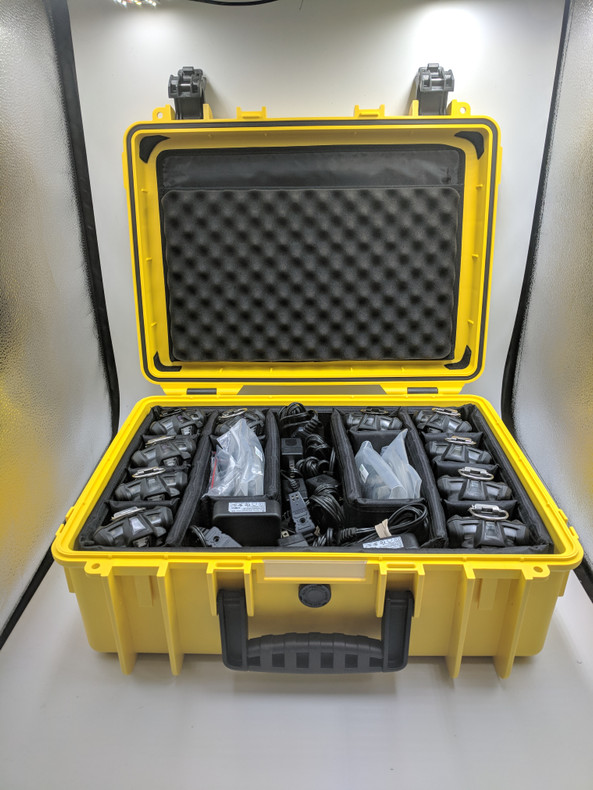
A shutdown contractor who needs twelve 4-gas monitors for three weeks has a very different problem than a municipal water department sending a crew into a lift station every day. One job has a clear end date. The other needs familiar instruments on site, ready for unplanned entries, with someone accountable for bump testing, calibration, and repairs.
At Ideal Calibrations, we sell, rent, and service portable gas detectors, and we walk customers through this decision all the time. This article will help you decide when to buy, when to rent, and when a mix of both is the most practical path.
Start with how often your crew needs it
Daily or weekly use points toward buying. If your people enter confined spaces, work around process lines, or monitor for H2S on a regular schedule, owning your detectors usually makes sense. Your team learns one instrument: its alarms, its buttons, its quirks. That familiarity matters when an alarm goes off and someone has seconds to react. Owned instruments also stay on site, ready for unplanned work and emergencies.
Occasional, seasonal, or one-time work points toward renting. If gas detection is a once-a-year event, such as a tank cleaning, a turnaround, a single sewer tie-in, or a pilot project, renting gets you the right instrument without carrying equipment that sits in a cabinet for eleven months. An idle detector still needs attention. Sensors age whether you use them or not, batteries need care, and calibration intervals keep running.
Check whether your fleet covers the hazard
Not every job calls for the same detector. A standard 4-gas monitor (O2, LEL, H2S, CO) covers most confined space work. But some jobs bring hazards your owned fleet may not cover:
- VOCs and solvents, which call for a PID (photoionization detector)
- Specialty toxic gases such as ammonia, chlorine, sulfur dioxide, or nitrogen dioxide
- Area monitoring around a work zone or perimeter instead of personal monitoring
- Pumped sampling, to test a space from outside before anyone enters
This is where renting earns its keep. Say your crew owns diffusion 4-gas monitors and a new job calls for a pumped multi-gas instrument with a PID. Renting that specialty unit is usually smarter than buying an instrument you may never need again. You keep your owned fleet for routine work and rent for the exceptions.
Price in the upkeep before you buy
Buying a detector isn't a one-time fix. You are also taking on everything that keeps it trustworthy:
- Bump testing and calibration - Manufacturers generally recommend a bump test before each day's use and a full calibration on the schedule in the instrument's manual (anywhere from every 30-180 days). That means the right calibration gas, regulator, tubing, and calibration adapter or docking station. It also means someone trained to do the work and keep the records.
- Sensors, batteries, and parts - Sensors have a working life and will eventually need replacing. Pumps, filters, and batteries wear out. Instruments get dropped, submerged, and coated in grime. A plan for parts and repair is part of owning.
- Records - If your company is audited, or if there is an incident, you will need calibration and bump test history. Owners are responsible for keeping it organized.
None of this is a reason not to buy. It just means the decision should include the person on your team who handles maintenance or whether you will send instruments out for professional service.
When renting makes the most sense:
- The project has a clear start and end. Turnarounds, outages, and construction phases fit this pattern.
- You need to scale up fast. A crew that normally runs four monitors may suddenly need fifteen.
- The hazard is unusual. Specialty sensors and PIDs are easier to rent than to justify buying.
- You want units that arrive ready. A rental from a gas detection specialist should show up calibrated so your crew only has to bump test and go.
- Your own unit is down. If one of your detectors is in for repair, a rental keeps the crew working.
When buying makes the most sense:
- Detection is part of daily operations. Routine confined space entry, utility work, and plant operations all fit here.
- Workers carry their own assigned monitors. Many crews want every worker to carry the same unit every shift.
- You need it available instantly. Emergency response and unplanned entries can't wait on a shipment.
- You have a maintenance plan. That means in-house calibration with proper gas and equipment or a reliable service partner.
- You want one platform across the company. A single brand and model simplifies training, parts, and calibration gas.
Questions to settle before you commit
Walk through these with your team:
- How often will we use gas detection?
- What gas hazards are on our jobs today, and which might show up on future jobs?
- Do we need diffusion monitors, pumped units, or both?
- Who will bump test, calibrate, and keep records?
- Do we have the right calibration gas and regulator for the instruments we want?
- What happens to our schedule if a detector fails in the middle of a job?
- Will workers need training on a new instrument?
Don't forget calibration gas and accessories
If you buy, plan for consumables from day one. Calibration gas has to match the manufacturer's specification, and the regulator has to suit the instrument. If you’re operating gas detectors, you need to have the gas available. For regulators, that means fixed-flow for diffusion units and demand-flow for pumped units. Getting this right at purchase saves headaches later. If you rent, ask whether you will need calibration gas for bump testing during the rental period, and confirm the instrument is configured for the gases on your job.
Need help with your gas detection equipment?
Not sure which way to go? Talk to people who work on gas detectors every day. Call Ideal Calibrations at (734) 956-0539 or email support@idealcalibrations.com.