
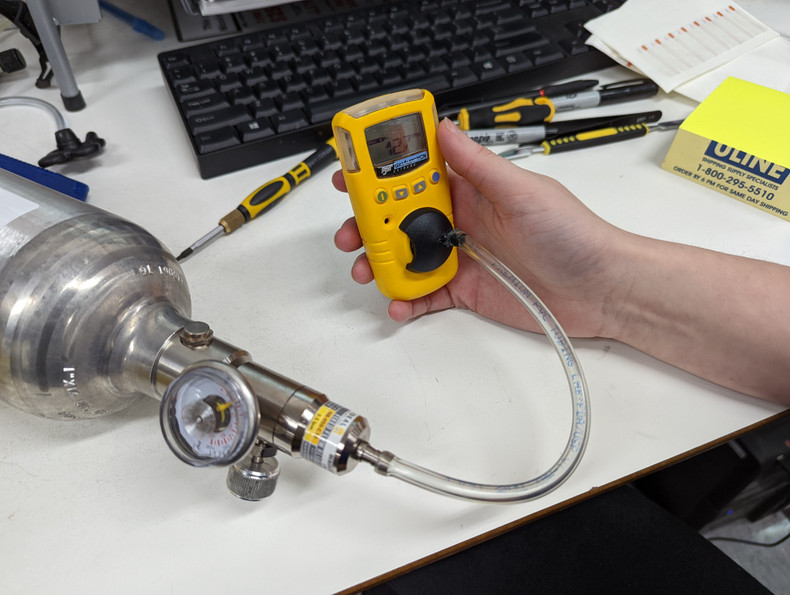
At Ideal Calibrations, we calibrate thousands of portable gas detectors every year for industries across the U.S. including oil & gas, mining, wastewater, construction, government and manufacturing. We know firsthand how critical proper calibration is. A bumb tested sensor can mean the difference between life and death.
Portable gas detectors are used every day in hazardous environments where toxic gases, combustible atmospheres, and oxygen hazards can develop quickly. In industries like oil and gas, wastewater treatment, chemical manufacturing, utilities, and confined-space work, crews depend on gas monitors to provide accurate atmospheric readings.
But like any measurement device, gas detectors don’t stay accurate forever.
Sensors drift, electronics age, and environmental exposure gradually changes how detectors respond. The only reliable way to know whether or not they’re working is through routine gas detector calibration and bump tests using the proper calibration gas.
This guide explains:
- How gas detector calibration works
- Why sensors drift over time
- Correct calibration procedures
What Is Gas Detector Calibration?
Gas detector calibration is the process of adjusting a gas monitor so its readings match a known concentration of test gas. During calibration, the detector compares its sensor response to a reference gas concentration (your calgas cylinder) and adjusts its internal measurement curve to ensure accuracy.
Calibration gas is manufactured with precise concentrations and traceability to measurement standards so that detectors can be aligned with known values. Maintaining this chain of measurement traceability is essential for reliable instrument readings. Without calibration, the numbers displayed on a detector gradually become unreliable.
Why Portable Gas Detectors Require Calibration
Gas sensor output changes over time due to several factors, including:
- Sensor aging (eating up of electrolytic fluid, catalyst material on LEL sensors, degradation/escape of gas on PID sensors, etc)
- Temperature and humidity fluctuations
- Exposure to chemicals or high gas concentrations
- Physical shock or vibration
- Contamination from silicones, solvents, or hydrocarbons
This gradual shift is known as sensor drift, but sensors can fail rapidly for the reasons above as well.
Under normal conditions, sensors may drift 1–5% per month, depending on sensor type and operating conditions. Over long periods this drift can become significant.
For example:
- A carbon monoxide sensor calibrated at 100 ppm may read 95 ppm after one month.
- After two years of drift, readings may be 40% lower than the actual gas concentration.
A monitor in this condition may still appear functional but will no longer measure gas accurately. Without running actual gas over the sensor, you really have no idea how the sensor will respond.
Calibrating your detector gives you the assurance that the monitor is reading and showing the sensor output properly.
Bump Test vs Calibration: What’s the Difference?
Two common maintenance procedures are used with portable gas detectors:
Bump Test (Function/Qualitative Check)
A bump test briefly exposes the monitor to gas to verify that:
- Gas reaches the sensors
- Sensors respond to gas
- Alarms (vibrating, horn, and flashers) activate properly
This confirms that the monitor will detect gas, but doesn’t test for accuracy.
Full Calibration
Calibration adjusts the instrument so its readings match the known concentration of calibration gas. This ensures that the numbers displayed on the screen are accurate. Most industrial safety programs use both procedures:
- Frequent (usually daily or with shift changes) bump testing to verify operation
- Regular calibration (varies by manufacturer, we recommend monthly) to maintain accuracy
How to Calibrate a Gas Detector (Step-by-Step)
Although button sequences vary by manufacturer, the core calibration process is nearly identical across all portable gas monitors.
Step 1: Gather Calibration Equipment
Before starting calibration, ensure you have:
- Correct calibration gas cylinder
- Proper regulator (demand-flow for pumped units or fixed-flow for diffusion units)
- Calibration cap or adapter for the detector
- Short tubing connection (typically under 3 feet)
- Clean air or a zero-air cylinder if necessary
Using incorrect gas concentrations can produce significant measurement errors. Make sure you double check that your gas has the correct concentrations for your equipment and is within the expiration date!
Step 2: Perform Fresh-Air (Zero) Calibration
Most detectors begin calibration by establishing a baseline reading in clean air. During this step:
- Place the detector in clean air (if not in a clean environment, use your zero air cylinder here).
- Initiate the zero calibration function.
- Allow sensors to stabilize.
The monitor records the baseline sensor output and sets the reference point for future readings.
Step 3: Apply Calibration Gas (Span Calibration)
After zero calibration, the next step is span calibration.
- Attach the calibration cap or inlet adapter.
- Connect tubing and regulator.
- Apply calibration gas.
- Allow readings to stabilize (usually 30–60 seconds).
- Confirm calibration values.
The detector adjusts its internal response curve so readings match the known gas concentration.
Step 4: Verify and Record Results
After calibration:
- Remove calibration gas
- Allow sensors to return to baseline
- Confirm readings return to normal values
Record calibration data including:
- Date and technician
- Gas concentration used
- Cylinder lot number
- Calibration results
Maintaining calibration records helps identify sensors approaching end-of-life.
Common Gas Detector Calibration Mistakes
Even experienced technicians occasionally make calibration mistakes. The most common issues include:
Using Expired Calibration Gas
Reactive gases such as hydrogen sulfide degrade over time, which can cause detectors to calibrate incorrectly.
Using Incorrect Gas Concentrations
Calibration gas must match the values programmed in the detector.
Zeroing in Contaminated Air
Fresh-air calibration should never occur near engines, chemical vapors, or exhaust fumes. Don’t zero in your garage next to trucks!
Ignoring Environmental Factors
Altitude, humidity, and temperature changes can influence sensor readings.Try and zero/calibrate in the same environment you’ll be using the detector in.
When to Send Gas Detectors for Professional Calibration
Manual calibration works well for small fleets, but professional calibration services are often preferred when organizations require:
- Certified calibration documentation
- Sensor diagnostics and replacement
- Fleet-wide maintenance programs
- Rapid turnaround for multiple instruments
When shipping detectors in for service, include the calibration service request form with the equipment to ensure the repair team has the necessary information to process the instruments quickly.
Gas Detector Calibration Checklist
Before performing calibration, confirm the following:
- Calibration gas cylinder is correct concentration
- Gas cylinder has not expired
- Regulator matches detector type
- Calibration adapter fits detector model
- Fresh-air environment is available
- Calibration results are recorded
Consistent calibration practices ensure portable gas monitors remain accurate and dependable in hazardous environments.
Frequently Asked Questions
How often should gas detectors be calibrated?
Most safety programs perform calibration monthly, although frequency may increase depending on environmental conditions, sensor type, heavy instrument use, or manufacturer recommendations.
What gas is used to calibrate a 4-gas detector?
Typical 4-gas calibration mixtures include:
- Methane (LEL) (or Pentane, Pentane Simulant, or Propane)
- Carbon Monoxide (CO)
- Hydrogen Sulfide (H₂S)
- Oxygen (O₂)
Can you calibrate a gas detector yourself?
Yes. Many detectors support manual calibration using calibration gas, regulators, and calibration caps. However, larger fleets often use automated docking stations or professional calibration services.
What happens if a gas detector is not calibrated?
Uncalibrated detectors can drift significantly from true values, potentially under-reporting dangerous gas concentrations and creating unsafe working conditions.
We hope you enjoyed this guide, if you have any questions, please get in touch by phone, email, or through the chat function at the bottom right of this page!