The calibration gas industry produces precise gas mixtures which are certified and traceable to national standards. These mixtures calibrate gas analyzers, detectors, emissions monitors, and lab instruments. They are calibrated for the safety industry, environmental compliance, process control, and research. Calibration gases, also called span gas or reference gas, come in pressurized cylinders, usually sized in 103L steel for non-reactives (the 34L CGA600 is mostly obsolete), and 34L, 58L, and 116L aluminum cylinders for reactive gases. They range from simple binary mixes to complex multi-component blends at percent-to-ppb levels.
How the Industry Started
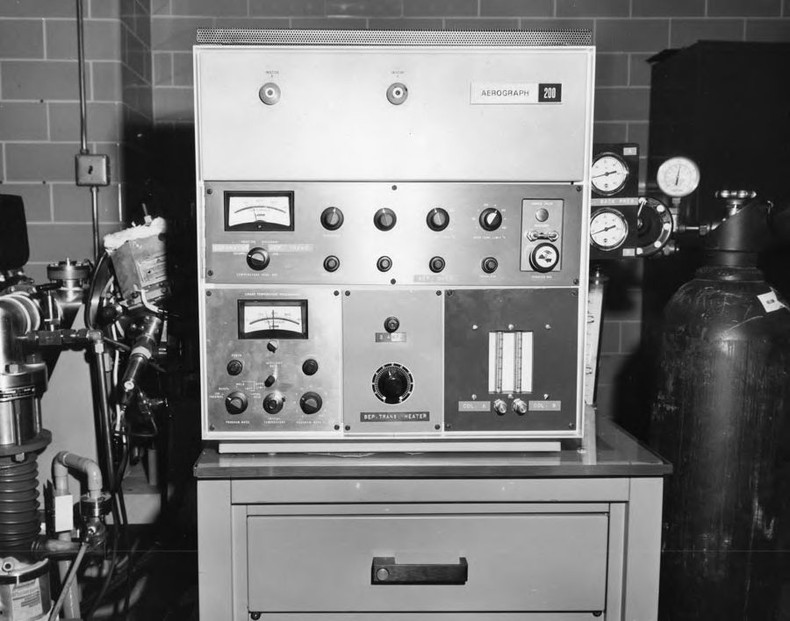
The calgas industry’s roots trace to early analytical instrumentation in the twentieth century, including gas chromatography (invented in 1952) and the first gas detectors. Labs once mixed their own standards individually, but these lacked consistency and traceability.
The modern spec gas industry began in 1927 when Matheson Gas Products became the first reliable commercial source of high-quality scientific gases and equipment in the United States. Matheson supplied ultra-pure gases for early gas chromatographs and created the lecture bottle style cylinder still used in labs today. This shifted the field from improvised mixes to certified calibration standards from reputable companies.
Timeline of Key Advancements
Here are some big milestones for those of us keeping monitors accurate:
- 1927: Matheson Gas Products launched the first reliable commercial specialty gases and lecture bottles.
- 1952: The invention of gas chromatography drove demand for consistent reference standards.
- 1960: Scott Specialty Gases founded by Fred Merz in Pennsylvania, focusing on high accuracy, stable gas mixtures.
- 1970s: The Clean Air Act and EPA rules created an urgent need for stable, accurate protocol gases, but steel cylinders revealed stability problems.
- 1976-1977: ASTM papers and EPA symposium established Protocol Gas standards with NIST traceability.
- 1978: NorLab, a division of Norco, entered the Specialty Gas business and became a dominant regional player.
- 1980s: Treated aluminum cylinders and basic passivation became standard for reactive gases.
- 1993: Mesa Specialty Gas founded by Don Tysee to take on the US and near Eastern Markets, now run by his son, Mark Tysee.
- 1998: Spec Air, the first company to use portable reusable aluminum cylinders, is founded.
- 1990s-2000s: Advanced coatings and patents extend shelf life; major consolidation followed as Air Liquide acquired Scott Specialty.
- 2001: Spec Gas, Inc started by Alfred Boehm and son Marc Boehm, specializing in difficult mixtures.
- 2003: Red Ball Oxygen entered the Specialty Gas business and experienced growth in the South Eastern US.
- 2008: Rick Moore opens Ideal Gases with a focus on a new coating passivation technique for calibration gas cylinders.
- 2009: Born out of his experience with calibration and repair of monitors and his father’s experience in specialty gas, Ideal Calibrations was formed, eventually growing to acquire Ideal Gases and form their gas blending division in 2020.
- 2010s-present: Ecommerce platforms, recyclable cylinders, smart sensors, and ppb-level reactive mixes become routine.
Industry demand grew as environmental rules have become more restrictive. The 1970s EPA emissions programs helped develop standardized protocol gases and OSHA’s demands for safety mixtures and compliance rapidly grew the market with new customers requiring gas detection and maintenance.
Cylinders Used and Where They Came From
Gas bottles, commonly known as gas cylinders, have played a pivotal role in the advancement of energy technology. These containers, designed to store gas under pressure, have evolved significantly since their inception, becoming integral components in various industrial, commercial, and residential applications.
Gases were filled in high-pressure steel cylinders in the early days. These cylinders were the standard industrial types, near shoulder high, rated between 2,000 to 3,000 psi, and weighing near 100 lbs. In 1913 the Compressed Gas Association was founded. As the industry evolved new standards for cylinder manufacturers were developed. Soon, manufacturers of cylinders aligned their products with Compressed Gas Association standards.
By the 1960s and 1970s, aluminum cylinders took over for the reactive mixes because they were lighter and more corrosion-resistant. Producers bought empty aluminum cylinders, cleaned and passivated the interiors, and then blended gases gravimetrically or volumetrically, analyzed them, and certified the finished product.
P.S.I. Plus, founded by Doug Dilla and later acquired by Bevin Bros, and Sharpsville Container Corporation supply most of the 103L steel cylinders used by the market. Luxfer, Catalina, and Metal Impact supply the great majority of aluminum cylinders.
Key Early Players
Matheson Gas Products pioneered specialty gases in 1927, including high purity and calibration mixtures. Scott Specialty Gases, founded in 1960 in Plumsteadville, Pennsylvania, became the key early specialist in EPA protocol gases. Scott focused on high-end mixes and equipment, worked directly with NIST, EPA, and ISO, and set the benchmark for environmental standards. Air Liquide acquired Scott in 2007 and continued the brand. NorLab’s entry in the marketplace as a Specialty Gas Supplier came in 1978.
Problems Encountered
The biggest challenges in calgas have been stability and accuracy. PPM blends of reactive gases such as hydrogen sulfide, sulfur dioxide, nitrogen dioxide, hydrogen chloride, and hydrogen cyanide reacted with metal cylinder walls, causing fade or drift. Steel cylinders corroded easily and stable reactive gas mixtures were impossible to achieve in them. Moisture, oil residues from cylinder manufacturing, or contaminants from filling altered concentrations. Before EPA protocols, lot-to-lot variability was common and shelf lives were very short. Verification took time and money, while inaccuracies could void compliance data or trigger fines.
Solutions came slowly. Chemical passivation, electropolishing, and nickel plating on the inside of steel cylinders were all tried. They also tried plastic coating the inside of steel cylinders with fluorinated high density polyethylene. Then, a 1976 ASTM paper highlighted the move to treated aluminum to make standards more stable. NIST traceability and EPA certification periods based on real stability data became normalized. Non-reactive mixes last years so they were no problem, but some reactive mixtures were stable for only 6-12 months in steel cylinders, whereas more difficult mixtures disappeared in minutes. Finally, Luxfer introduced a new type of aluminum cylinder that solved many of the problems with a cleaner metal interface.. Supply chain issues and the cost of stocking thousands of custom blends were expensive, but the industry eventually ramped up to meet the demand.
How the Market Has Evolved
Major players such as Air Liquide, Praxair (now Linde), and Air Products expanded into specialty gases in the 1950s and 1960s, targeting large accounts. Independents like Scott, Spec Gas, Norlab, and Ideal Calibrations came later and cornered smaller niches in the market.
The 1970s and 1980s brought explosive growth in the industry from increased regulations and the expanding market for portable detectors.. The 1990s and 2000s saw heavy consolidation. Today smaller disposable and recyclable cylinders, smart sensors, and on-site generation options have been developed. Near-shoring, stricter specs, and digital certificates keep the market growing. Plus, industrial safety requirements, emissions monitoring, semiconductors, medical, and tighter rules continue to drive steady growth to hundreds of millions of dollars annually.
Markets and Typical Users
Calibration gas serves a handful of core markets that drive daily demand on job sites and in plants.
Industrial safety and process control are the biggest slice. Oil and gas operations, petrochemical plants, manufacturing facilities, mining, and utilities use it constantly. Safety officers and instrument technicians are the main users here. They calibrate portable and fixed detectors for confined space entry, leak detection, and personal protection to stay OSHA compliant.
Environmental monitoring and regulatory compliance is another major area. Power plants, refineries, chemical facilities, and wastewater plants rely on EPA protocol gases for continuous emissions monitoring systems. Environmental engineers and compliance managers depend on these mixtures to meet Clean Air Act requirements and avoid costly violations.
Laboratories and research facilities form a steady segment. Scientists and lab technicians use precise standards to calibrate gas chromatographs and other analytical instruments for quality control and experiments.
Healthcare facilities calibrate blood-gas analyzers and respiratory equipment. Semiconductor and electronics plants need ultra-high-purity mixes for process control. Automotive emissions testing labs round out the picture, but by and large the typical customer is the field tech or plant supervisor who needs large or small cylinders that work right away, arrive fast, and keep monitors reading true.
Rise of Ecommerce
Ecommerce entered the calibration gas industry in the late 1990s and grew quickly in the 2000s. Suppliers added online catalogs and ordering. By the 2010s, full platforms with carts, custom quotes, and fast shipping became common. This let smaller specialists reach customers directly, cut lead times, and sharpened competition.
At Ideal Calibrations we have supported the gas monitoring industry since 2009. We manufacture high-precision calibration gas in-house and sell it directly through our online store. Our model delivers ready-to-ship blends for all major detector brands with rush or free hazardous material shipping on qualifying orders, plus repair, rental, and consulting services that keep field teams running without downtime.
Other manufacturers, including PortaGas (now part of Linde), Gasco (acquired by Airgas), MESA Specialty Gases, Global Calibration Gases, Red Ball Oxygen, and similar players with disposable and returnable portable calgas options generally relying on traditional distributor networks such as Grainger, safety suppliers, and specialty warehouses.
Technological Advances in Calibration Gas
Advances focus on cylinder materials, precise blending, automated analysis, and especially interior treatments for better stability. Steel gave way to aluminum and coated versions for reactive gases. Gravimetric filling with digital scales now results in tighter tolerances.
A 1998 Air Products patent (EP0824970A2) showed polar polymer coatings like poly(vinyl alcohol) cut nitric oxide loss from 15-30 percent to under 1.5 percent over years. Electropolishing, rigorous stability testing, and these coatings now make ppb-level reactive mixes practical with longer shelf lives.
Cylinder preparation starts with pickling, an acid etch that removes oxides and contaminants. Silanation or chemical vapor deposition then adds a thin inert silicon layer that bonds to the metal and blocks adsorption. Companies apply patented coatings such as Dursan or Dursox for corrosion resistance and low reactivity. Parylene vapor-deposited polymer coatings, including the patent filed by James Moore and Ferrel Moore, form a conformal pinhole-free barrier suited to highly adsorptive or corrosive gases.
Differences in Preparation of Non-Reactive, Reactive, and Highly Reactive Gases
How a mix is prepared changes with gas composition and reactivity to guarantee stability.
Non-reactive gases such as methane, carbon dioxide, or oxygen mixes in nitrogen or air need only standard cleaning and drying in steel cylinders. They are followed by analysis and certification of batch or individual cylinders. Typical shelf lives are 5 years or more with little or no drift.
Reactive gases such as hydrogen sulfide or sulfur dioxide require chemical passivation such as silanation, parylene deposition, or other special treatments. Aluminum cylinders and special valves are standard. Blending occurs in evacuated treated cylinders with stability testing. Certification periods run 12 to 24 months.
Highly reactive or corrosive gases such as nitrogen dioxide, hydrogen chloride, chlorine, or certain organics need the full process: electropolishing, pickling, and advanced coatings like CVD silicon, polar polymer films, or special treatment such as those done by Luxfer. These create non-adsorptive surfaces even at trace levels. Filling follows a strict vacuum under heat and purge steps with real-time checks. Shelf lives often stay at 6 to 18 months, and some mixtures need frequent recertification, such as chlorine. Different coatings produce very different results; some hold stability for years while others fail to prevent rapid breakdown.
Summary
From the early days of Matheson through EPA protocols, advanced coatings, and the shift to ecommerce, the calibration gas industry has steadily improved to deliver the reliability field crews count on every day. At Ideal Calibrations we are proud to carry that tradition forward with in-house manufacturing, fast shipping, and full support services that help keep your monitors accurate and your teams safe. This history draws from verified industry documents, patents, company records, and personal testimony from industry experts.
If you're looking to purchase calibration gas from us, please visit https://idealcalibrations.com/calibration-gas